C. Units and Applications
C.1 Correct Use of Units
C.1.1 On the Seriousness of the Misuse of Unit Systems
(1) At an apartment complex in an innovation city
In one apartment complex within an innovation city, the speed notice board diligently announces that the speed limit is 20 Km/h. It calls itself innovative in name only.
(2) At Hwigyeong Station
At Hwigyeong Station in Seoul there used to be several elevators, and at that time not many of the elevators there used units correctly. Even that good-looking elevator made by one of the nation's leading elevator manufacturers was using Kg. Every morning and evening one has to take the elevator, and it becomes a daily routine that everyone, trying to avoid eye contact, ends up staring intently at those meaningless characters. We are being forced, unconsciously, to accept the wrong use of units. It is truly heartbreaking that this is mercilessly exposed to young people who should live in an advanced nation, thereby forcing backwardness upon them.
(3) The primary responsibility of educational institutions
It is a rather pathetic story, but I believe there is hardly any university that is free from the unit problems of its facilities and signposts. When you arrive at an important location on some campus, it clearly teaches M rather than m. Both students and professors are being (mis)educated. When everyone does this, it ultimately becomes a matter of the dignity of that organization and, in the end, a factor that lowers the dignity of the nation.
(4) Government agencies also take the lead in this matter
On a single signpost of a provincial Small and Medium Business Administration office, M and Km appear at the same time. Considering the role of the Small and Medium Business Administration, this cannot but be truly pathetic. Of course, when driving along roads under the jurisdiction of the state or local governments, one frequently sees signposts or information boards with incorrect units. Km and M are very frequently encountered bad units. Driving along a highway, one can see MHz stylishly rendered in italics. This too is wrong. Units must always be written only in Roman type. The reason is that, for example, mass can be written in an extreme case as m = 10 (kg·m-1·s-2), and in this case the variable m denoting the magnitude of the mass and m, the unit of length, must be distinguished.
(5) Scholars are no different
The educational materials on units circulating on the Internet have problems as well. In particular, many of them are stylishly rendered in italics. For instance, 1N = 1kg m/sec2 is used quite casually to explain 1 newton. Even among scholars and researchers, there are cases where the unit of seconds is unconsciously used as sec. In the SI unit system, s is the correct answer. Of course, in the British units, sec is the correct unit for seconds. However, academia has already been unified under the SI unit system. I have seen a researcher who was criticized in the review result of an international journal paper because of sec, and there was also a professor who said he had used Kg without any problem his entire life.
(6) Habitual mistakes of inspection and certification agencies
When using a word processor, MPa is sometimes automatically corrected to Mpa. Perhaps for that reason, I have seen numerous cases where Mpa is stated in official inspection reports issued by domestic research institutions. This is a national disgrace. To put it in extreme terms, it could even lead to a result where the ordering party demands a lower price or terminates the transaction.
C.1.2 On Dimensions and Unit Systems
Units consist of base units, derived units, supplementary units, and unit prefixes. To first explain the easiest, the supplementary units, the ratio of circumference π belongs to this category. That is, what converts an angle into radians belongs to the supplementary units.
Unit prefixes include those using lowercase letters such as k, c, m, μ, n, and those using uppercase letters such as M, G, T. One must not forget that the criterion for distinguishing uppercase from lowercase is k and M. All prefixes at or below k, including k, must be written in lowercase.
Originally, in the SI unit system, the base dimensions (units) are length (m), mass (kg), and time (s). Temperature is based on K (Kelvin temperature, Celsius temperature + 273.15). This is the reason why the unit prefix k must be distinguished from K. In units, the uppercase K is naturally the unit of temperature. Therefore, among Km, m, Mm, and mm, the unit that expresses a physical quantity of a different dimension is Km. Km is not wrong. The others are all units expressing length, but Km denotes the dimension of temperature × length. When performing mechanics calculations, one may indeed encounter the unit Km. In the field of electrical and electronic engineering, V and A are units representing the base dimensions of voltage and current. Of course, KB, which represents the capacity of a computer, is also wrong.
According to the weights-and-measures rules presented by the Ministry of Commerce, Industry and Energy, under any circumstance the unit prefix meaning 10 to the power of 3 must be the lowercase k. For example, in 'Kg is defined a thousand grams', K is wrong. The unit conventions take precedence over English grammar. Such content was specified in the weights-and-measures rule explanatory material posted on the Ministry of Commerce, Industry and Energy website.
Finally, to explain the derived dimensions and their units, the unit of velocity is fundamentally m/s. This is used as it is without inconvenience. In the SI unit system, force is defined and used as the newton (N); that is, the force required to accelerate a mass of 1 kg at 1 m/s2 is defined as 1N = 1kg·m/s2. Therefore, force is not a base dimension in the SI system, and force is expressed by the derived unit N. When 1 kg is sustaining the gravitational acceleration of the earth (about 9.8 m/s2), that is, when it is at rest, a force of 9.8 N is generated, and it is common to approximate this as 10 N in calculations.
J and W, which define work and power, and Pa, which represents pressure and stress, also belong to the derived units. 1 Pa (pascal) is the magnitude of the pressure generated when a force of 1 N acts uniformly over an area of 1 square meter. 1 Pa is a very small value to be used for engineering purposes including metal forming. Therefore, Pa is usually accompanied by a unit prefix such as M (106) or G (109) in front of it.
C.1.3 Reasons for Confusion over Units
Many engineers are confused when dealing with force or mass. The cause is that two systems of dimensions and units are in use. These are the traditional unit system (a term used for convenience of explanation), represented by the British unit system with length, force, and time as base dimensions, and the scientific unit system called the SI unit system, with length, mass, and time as base dimensions. Therefore, fundamentally the pound (lb) was defined to express weight (self-weight, gravitational weight), and kg was defined for the purpose of expressing mass.
When the concept of mass did not yet exist, weight, that is, gravitational weight, was used in everyday life. The geun and gwan formerly used in our country, and the pound still widely used in the English-speaking world, belong to that category. Expressing mass through dependence on force, that is, expressing mass by self-weight, is not scientific. This is because the weight (a term identical to gravitational weight and self-weight) determined by Newton's law of universal gravitation, although not large, has a clear difference depending on location. That is because the earth is not a perfect sphere, a true sphere. Therefore, from the time human beings understood and introduced the concept of mass, because it is scientific to express mass, which is an invariant in classical mechanics, the establishment of a new unit system became necessary, and that gave rise to the SI unit system. So kg was defined to express mass. However, due to the long habit of human beings who have used weight, kg is also often used as kgf, that is, expressing the force generated by a stationary object of mass 1 kg under the earth's gravitational acceleration \(g\) = 9.8 m/s2. For example, if 21000 kg/mm2 was used instead of 210 GPa as the elastic modulus of steel, this kg means kgf or kg-force. Of course, it does not matter if it is not expressed as kg-force. Considering the dimension of the elastic modulus, it cannot but be kg-force. However, when kg was originally defined, kgf or kg-force was not also defined at the same time, and N was defined as the unit of force. It is a basic principle that definitions must not be duplicated. It is the same as how duplicated dimensions on a drawing invite disputes. So kgf or kg-force should be regarded as having been used for convenience afterward, and if the meaning is understood, kgf can also be expressed as kg. Contrary to the scientific unit system, there are also cases where lb, defined in the British unit system for the purpose of expressing weight, is used as lbm (pound mass). For example, when a mass is said to be 10 lb, lb, contrary to its original purpose, means mass. Of course, in the British unit system the slug is defined as the unit of mass.
In any case, contrary to the original purpose, it is common to mix the two unit systems in everyday life. When looking at catalogs or product specification sheets produced in the English-speaking world, one often sees the mass moment of inertia expressed in the unit lb·ft·sec2. To a non-expert this may seem a bit strange, but it is an expression that follows the principle. Here lb represents weight. This is a correct expression according to the definition. There can also be cases where this is expressed as lb·ft2. Here 1 lb, that is, 1 lb mass, means the mass required for a stationary object to generate a force of 1 lb under the earth's gravitational acceleration \(g\) = 32.2 ft/sec2. However, it is common to express the unit of the mass moment of inertia as kg·m2, and it is not common for it to be expressed as kg·m·s2. Of course, it is not wrong. The reason is that although the backgrounds in which the two unit systems were created differ, we are still living in the process of development from the traditional unit system to the scientific unit system.
The problem, however, is that when the unit systems become confused, a big problem can arise from a small mistake. For example, a mistake in calculating the capacity of a press causes a direct loss. The cause of such problems clearly exists as mentioned earlier. Academically, force, load, and so on should be used as, say, 2000 N, but in the field it is a fact that 200 kg is more convenient. And 1 engineering pressure is generally calculated as 1 kg/cm2; as seen in such an example, this is partly because kg-force is actually used in many formulas, and it is also a fundamental cause that cannot be ignored that many technical materials were created empirically in advanced countries and the improvement of such technical materials proceeds at a low pace. For example, many of the materials produced in Japan use kg/mm2 as the unit of flow stress. The engineers in our country, perhaps because the materials handed down from above are few, mostly use MPa. In other words, among the technical materials of the technologically advanced countries in the past, many were designed to be usable without deep engineering thought, and while the unit as a symbol itself follows the scientific unit system, its meaning is based on the familiar engineering unit system. It is just like how, when we are asked for body weight, that is, force, we answer 70 kg, that is, mass. Of course, if we recognize 70 kg as kg-force, that problem is resolved, but there is still the problem that it does not fit the intent of the SI unit system. From the standpoint of the English-speaking world, there is no problem. When asked what one's body weight is, saying 150 lb is clean. A considerable number of the technical materials produced in advanced countries in the past, that is, the so-called formulas or equations, used the way of using units and unit systems as used in everyday life, and these formulas and methods of application do not change easily. Since an era in which people are asked what their mass is in everyday life will not come, this slight confusion will continue. The only way to avoid this confusion is to simultaneously raise the level of mechanical expertise and the power of thinking about unit systems.
Recently, using MPa instead of kg/mm2 has become common. Official documents that we prepare, such as papers, patents, and public contracts, are in principle to follow scientific units, that is, SI units. However, while the traditional units (geun, gwan) of the method by which the weight of objects was measured with a balance beam scale comparing weights in our country in the past have disappeared, in the commercial materials and documents of the English-speaking world the British units (lb, ft, sec) are still alive and breathing, representing the traditional unit system, and the reality is that the international standing of the English-speaking world cannot be ignored. So, contrary to the wishes of academia, one cannot simply trample the traditional unit system as unscientific.
C.1.4 How to Prevent Mistakes from Misusing Unit Systems
If units are wrong, the value an individual possesses cannot be recognized, and the competitiveness of the organization to which the individual belongs declines. The correct use of unit systems is connected to the qualities of the individual, the competitiveness of the organization, and further to the dignity of the nation. The clear fact is that the frequency of misuse of unit systems increases the further one goes from advanced countries toward less developed countries.
The rules that help one use unit systems without mistakes can be summarized as follows.
-
Units are, in principle, expressed in lowercase, and if the unit originates from a person's name, only the first letter is expressed in uppercase. For example, N (newton), J (joule), K (kelvin), Pa (pascal), Hz (hertz), W (watt), V (volt), A (ampere), and so on are units originating from persons' names, and m, kg, s of the SI unit system and lb, ft, sec of the British unit system must be used only in lowercase.
-
The unit prefixes k (103) and below (h (10-1), c (10-2), m (10-3), \mu (10-6), n (10-9), and so on) must be lowercase, and M (106) and above (G (109), T (1012), and so on) must use uppercase.
-
Units must be expressed in Roman type, and variables and the like must be expressed in italics. For example, when the spring constant and mass are \(k\) = kN/mm and \(m\) = 10 kg respectively, the letters \(k\) and \(m\) are each used three times, but there is no confusion. If these rules are not followed, mechanical calculation becomes nearly impossible.
C.1.5 Concluding Remarks
Before becoming an advanced nation, at the national level we must first fix the signposts on the roads. I believe this can be improved easily and in a short time by educating all makers of signs and promotional materials, and if they do not comply, imposing fines according to law and barring them from participating in government-related projects. Some may call this an abuse of power, but this is a matter of our dignity and a matter of survival. When you go to Japan, the frequency of wrong units becomes far smaller than in Korea, and when you go to the United States, wrong units can hardly be found at all. When you go to latecomer developing countries, you come to realize that the misuse of units is a truly serious problem.
We are not without a tendency to hastily finish or acquire anything in a single stroke. And we also have a strong tendency to use basic conventions for our own convenience. Perhaps for that reason, the reality is that our level of consciousness falls short of our standard of living. The cases of inaccurate use of units and the trend of disregarding them are one aspect of this social pathology. Now each of us needs the habit of looking back to see whether there are elements by which we ourselves undermine our own value.
And if expertise regarding unit systems is required, since the elevation of specialized knowledge together with the unit system is essential, I recommend actively participating in relevant educational opportunities and raising the level of completeness through dialogue. In particular, this is because mechanical knowledge is a kind of culture and language that cannot be directly converted into value, that is, a high-quality language communicated among engineers. Together with the elevation of engineering knowledge, especially mechanical knowledge, one's conviction regarding the use of unit systems will become firm.
C.2 User Units
There are input variables that the user of a metal forming simulator must adjust based on the size of the forged product and the process variables. For example, the allowable die penetration depth of a node, the allowable minimum effective strain rate, the allowable die penetration depth of the material, the die velocity for velocity-independent problems, and so on belong to this. These values are things that the user of a metal forming simulator must determine empirically, considering process variables such as the size of the product and the die velocity, as well as the accuracy of the predicted results. However, because there are no standards for these values, it is judged that difficulties are being experienced in systematizing experience.
Metal forming simulation results, even for the same problem, are somewhat affected by the variables the user selects. In most cases, when the values recommended by the developer of the metal forming simulator are used, or when they are determined empirically while understanding the theory, satisfactory results can be obtained. However, a user who mainly designed forging processes for products of 50 mm in size will be bewildered, unless he is a theory expert, when reviewing a forging process analysis problem for a 1 mm-class miniature forged product or a 1000 mm large forged product. Depending on the case, results that are somewhat less accurate may be obtained, and one may fail to have confidence in the obtained results.
C.2.1 Analysis of Micro-Forming Processes
In general forging processes, that is, when the diameter of the product is around 50.0 mm in cold forging or around 150.0 mm in hot forging, there is little problem. However, the situation is different in micro-forming processes where the size is very small, or in forging processes of large forged products used in power-generation equipment. In such cases, it may be desirable to solve the problem by multiplying the unit of length by an appropriate scale to suitably convert the length values, so that numerically the product becomes one of ordinary size. There are also metal forming simulators that provide such a function in the software. When such a function is not provided, the user can change the unit system.
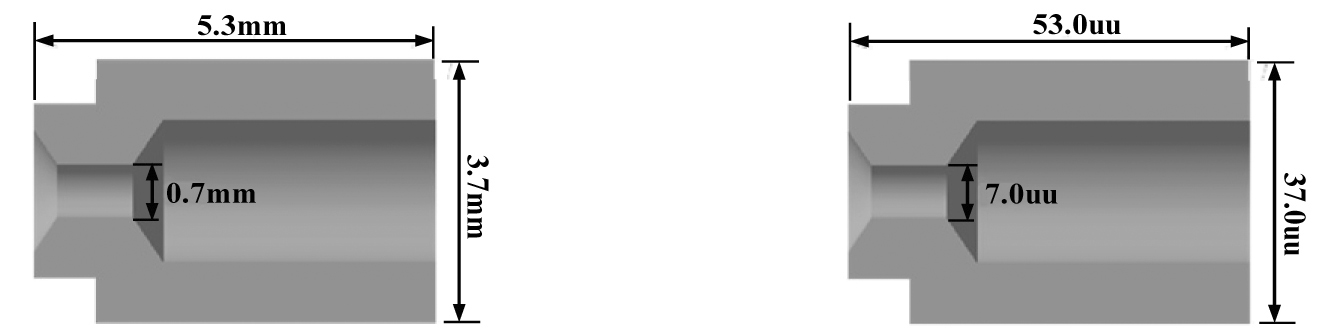
Figure C.1 Shape and dimensions of application example 1 Figure C.2 Modified dimensions
The conversion of the unit system is explained through an application example. Figure C.1 shows the drawing of the forged product to which it is applied. As seen in this drawing, the size of the target product is very small. The outer diameter is 3.7 mm and the diameter of the inner piercing portion is 0.7 mm. If the metal forming simulation is performed with these values, due to the intelligence function of the metal forming simulation, some of the values assigned by the program itself, that is, the default values, may not be suitable for this problem. Therefore, it is desirable to use a unit system defined by the user instead of mm. For example, let the unit uu be defined as follows.
\(S\) uu = 1.0mm (5.13)
Here \(S\) is the dimension-modification ratio. Then, when \(S\) = 10, the drawing of Figure C.1 will be changed to Figure C.2. And when the material's deformation resistance equation is as follows,
expressing these in uu units gives the following.
Therefore, if the analysis is performed with the other input variables described above set to the values recommended by the program, one can be free from the influence of the size of the forged product described above. Even experts in theory and analysis technology cannot but hesitate as to how to handle the size-sensitive input variables described above when analyzing a large forging process with a radius of 5000 mm. In this case, it is desirable to solve the problem by converting to dimensions for which each person has set a standard using the method described above. In this case, note that when the material is velocity-dependent, the velocity must also be unit-converted at the same time.

(a) Experimental result

(b) Predicted result
Figure C.3 Comparison of experimental and analysis results of a micro-forming process
Figure C.3 shows a part of the results of the actual process and the corresponding simulation results [5.13]. The analysis results obtained using the converted unit system agree well with the experimental results. Using the converted unit system showed somewhat higher reliability in terms of volume change and the like.
C.2.2 Upsetting Analysis of Large Forged Products
Plastic heat is generated in both cold and hot processes. In general, the plastic heat in cold processes causes a temperature rise of the workpiece and the die, but the change in the deformation resistance equation due to the raised temperature is known to be very small. Therefore, since the flow analysis problem and the temperature analysis problem are coupled, this is called a coupled problem. The thermal data for the coupled analysis include thermal conductivity, heat capacity, the heat transfer coefficient of the workpiece-die contact surface, the heat transfer coefficients of natural and forced convection, the Stefan-Boltzmann constant, the ambient temperature, and so on. In isothermal analysis the analysis conditions are clear, but in coupled analysis the simulation results vary greatly depending on the thermal data, so careful attention is needed in inputting the thermal data.
When performing coupled analysis of a large forged product or an ultra-small forged product by the scaling method, since the analysis results are greatly affected by the thermal information, care must be taken in the unit conversion of the data mentioned above. Here, a case in which the scale was adjusted to perform coupled analysis is introduced. As the target problem for application, an upsetting process of ordinary size as shown in Figure 5.55 was selected. The simulation was performed for two cases: scale 1:1, that is, actual size, and scale 10:1.
[Table C-1] Thermal properties of the workpiece
| \(T\) (°C) |
\(k\) (\(\text{W/mm°C}\)) |
\(\rho c\) (\(\text{W}\cdot\text{s/mm}^{2}\text{°C}\)) |
|---|---|---|
| 700 | 0.255 | 0.00515 |
| 800 | 0.263 | 0.00515 |
| 900 | 0.0277 | 0.00515 |
| 1000 | 0.0291 | 0.00522 |
| 1100 | 0.0305 | 0.00522 |
| 1200 | 0.0319 | 0.00535 |
| 1300 | 0.0333 | 0.00558 |
[Table C-2] Thermal properties of the die
| \(T\) (°C) |
\(k\) (\(\text{W/mm°C}\)) |
\(\rho c\) (\(\text{W}\cdot\text{s/mm}^{2}\text{°C}\)) |
|---|---|---|
| 200 | 0.255 | 0.00515 |
| 800 | 0.263 | 0.00515 |
| 900 | 0.0277 | 0.00515 |
| 1000 | 0.0291 | 0.00522 |
| 1100 | 0.0305 | 0.00522 |
| 1200 | 0.0319 | 0.00535 |
| 1300 | 0.0333 | 0.00558 |
The thermal conductivity (\(k\)) and heat capacity (\(\rho c\)) of the workpiece and the die are as given in Table C.1 and Table C.2, respectively. The heat transfer coefficient of the die-workpiece contact surface is 0.04 W/mm°C, the Stefan-Boltzmann constant (\(\sigma\varepsilon\)) is 396.83 × 10⁻¹⁶ W/mm2°C4, and the convective heat transfer coefficient (\(h\)) is 0.295 × 10⁻⁵ W/mm2°C. The ambient temperature was set to 80°C, and the initial temperature of the workpiece is 1200°C.
Figure C.5 shows the predicted temperature distribution of the final analysis step. As seen in the figure, the temperature distribution of the actual-size analysis result and that of the analysis result with different dimensions showed almost no difference. This is a result that suggests that analyzing large products or ultra-small products using a user-defined unit system for non-isothermal analysis can be a means of increasing the reliability and accuracy of the simulation.
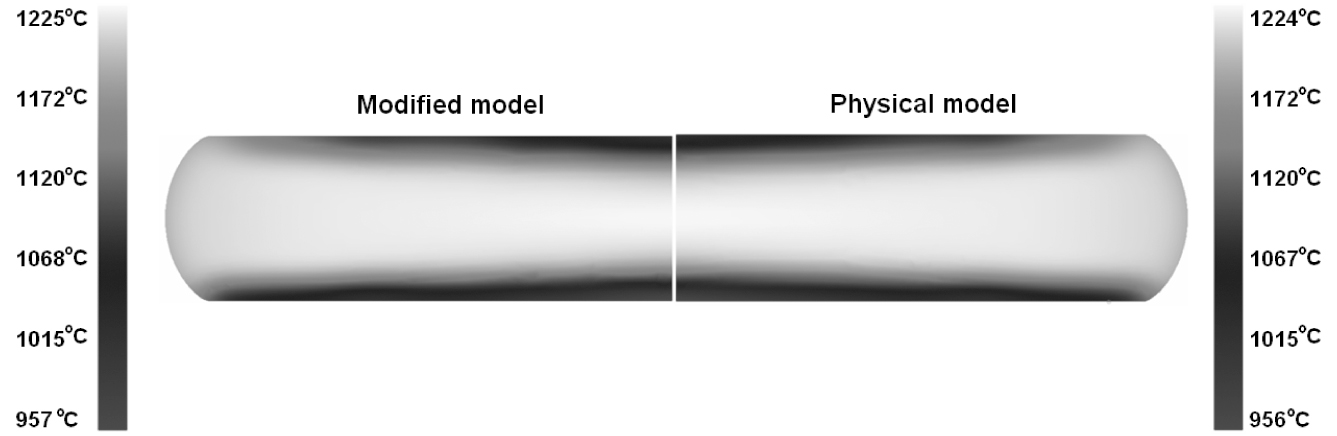
Figure C.5 Non-isothermal prediction results of the hot forging process